Protic Ionic Liquids (PILs)
Protic ionic liquid (PIL) is a subclass of ionic liquid that has a protonated cation and can be synthesized through a neutralization reaction which involves transferring a proton from a Brønsted acid to a Brønsted base.
B + A → HB+ + A-
PILs are a good conductor of protons and ions.
Water may be used as a solvents or titration can be performed without any solvent. Example
Complete proton transfer between the acid and base must occur for optimal production.
The cation on which the proton resides determines the proton activity of the IL.
To achieve this, there must be a high pKa difference between the acid and base.
In aqueous solutions, a difference greater than 10 is sufficient for more than 99% proton transfer.
Various factors, such as the physical and chemical properties of the base and acid determine the extent of proton transfer and ionicity of the IL.
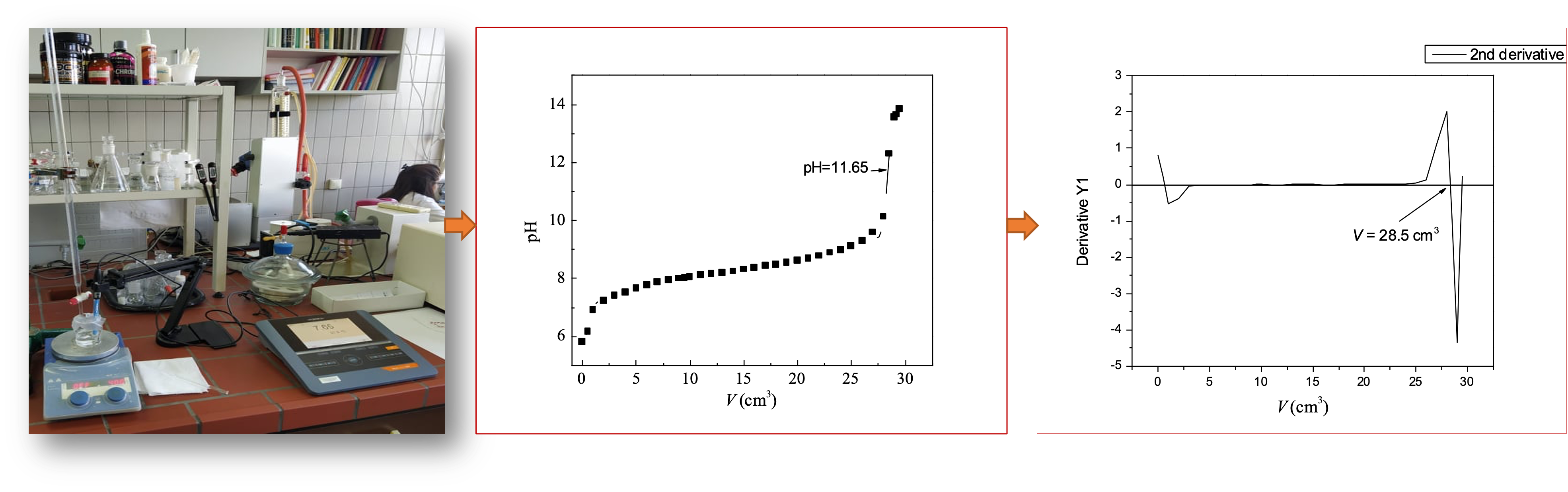
A highly recommended procedure is to determine an acid-base titration curve for the two components dissolved in water.
The equivalence point and pH at the end point confirm the purity of the IL after synthesis and any subsequent handling procedures.
Diluting an IL sample in water to the standard concentration confirms the previously determined equivalence point pH.